Friday, 23 March 2012

Complexity, Psychoanalysis, and Society: A One Day Conference at the Tavistock Centre. May 18


Tavistock Policy Seminars
‘Connecting public policy and human relationships’
 
Complexity, Psychoanalysis and Society
 
A Day Conference to be held on Friday May 18 2012
at the Tavistock Centre,120 Belsize Lane NW3 8BA


Andrew Cooper, Joseph Dodds, Margaret Lush, 
Michael Rustin, Graham Shulman, Terry Marks-Tarlow

Complexity theory is one of the most interesting and challenging perspectives on the explanation of behaviour in the natural, psychological and social worlds to have emerged in recent years. This Policy Seminar day conference will explore ‘complexity’ approaches in the field of psychoanalytic and psychotherapeutic practice, and in their wider application to social issues such as climate change.
 
Speakers will include Terry Marks-Tarlow (Los Angeles), author of Psyche’s Veil: Psychotherapy, Fractals and Complexity (Routledge 2008); Joseph Dodds (Prague), author of Psychoanalysis and Ecology at the Edge of Chaos, (Routledge 2011); Graham Shulman, child psychotherapist, Scotland; Margaret Lush, child psychotherapist, England; (each authors of journal articles on complexity theory in child psychotherapy) and Andrew Cooper, Professor of Social Work at the Tavistock Clinic and co-author with Julian Lousada of Borderline Welfare (Tavistock Clinic Series/Karnac, 2005).


Conference Programme
9.00 – 9.30 Arrival and conference registration
9.30 – 10.15 Terrry Marks-Tarlow: ‘Psychotherapy, Fractals and Complexity.’
10.15 -11.00 Open discussion
11.00 -11.30 Coffee break
11.30 – 12.30 Graham Shulman: Strange attractors in the dynamical systems of the mind.’
Margaret Lush: ‘Clinical facts, turning points and complexity theory’.
12.30 – 1.00 Open discussion
1.00 – 2.00 Buffet lunch in Tavistock Cafe
2.00 – 3.15 Joseph Dodds ‘Psychoanalysis and ecology at the edge of chaos.’
3.15 – 4.00 Open Discussion
4.00 – 4.30 Tea break
4.30- 5.30 Final plenary discussion, introduced by Andrew Cooper
5.30 – 6.30 Drinks reception
 

Conference Booking
 
There will be a charge for the Day Conference of £30, which will include coffee, tea, lunch and the drinks reception.
 
Bookings should be made to Simone Silverstein: ssilverstein@tavi-port.nhs,uk. You can book a place by email, but please send her a cheque made out to ‘The Tavistock and Portman NHS Foundation Trust’. Address: Simone Silverstein, Child and Family Directorate, Tavistock Centre, 120 Belsize Lane, London NW3 5BA

Sunday, 11 March 2012

5th International Nonlinear Science Conference, 15-17 March 2012, University of Barcelona, Spain. Society for Chaos Theory in Psychology & Life Sciences


I will be presenting on my book next week at the following conference in Barcelona, organised by the Society for Chaos Theory in Psychology & Life Sciences: 


The principal aim of the INSC is to provide a scholarly environment conducive to promoting exchanges between an array of disciplines to facilitate research and related academic activities in collaboration with colleagues worldwide.


The topics covered by the conference include applications of nonlinear dynamical systems theory and techniques to problems encountered in any area of the behavioral, social and life sciences including psychology, sociology, economics, management sciences, anthropology, aesthetics, education, biology, physiology, ecology, neuroscience and medicine. One or more of the following nonlinear concepts must be an explicit part of the presentation: attractors, bifurcations, chaos, fractals, solitons, catastrophes, self-organizing processes, cellular automata, agent-based models, network analysis, genetic algorithms and related evolutionary processes, econophysics, dynamical diseases, or closely related constructs. The broad mixture of the disciplines represented here indicates that many bodies of knowledge share common principles.


Contributions from other disciplines such as computer science, mathematics and engineering are also welcome provided the main focus of the paper is an application of nonlinear science in the behavioral, social or biological sciences.

Areas covered by the conference include: complex organizations, methods, epistemology, psychological processes, health and public policy, economy and finance, emotion and motivation, physiology and biology, social issues, education and development, nonlinear dynamics of the psychobiological adaptation to exhausting exercise, nonlinear models of processes in psychotherapy and psychopathology, work and management, stimulating evolution in human systems with compelling complexity metaphors.

Jose Navarro, Ph.D., Faculty of Psychology, University of Barcelona, Spain
Dimitrios Stamovlasis, Ph.D., Faculty of Philosophy, University of Thesseloniki, Greece
Stephen J. Guastello, Ph.D., Professor of Psychology, Marquette University, Milwaukee, WI USA
David Pincus, Ph.D., Assoc. Professor of Psychology, Chapman University, Orange, CA USA and President, Society for Chaos Theory in Psychology & Life Sciences.


I will be presenting on my book: 

Other speakers include:


Peter Allen
Complex Systems Research
Cranfield School of Management, UK
 

Complexity, Understanding and Evolution

In hard science a new theory must be capable of being falsified, and therefore must produce testable predictions, which can lead to genuine cumulative knowledge within the domain where repeatable experiments are possible. In complex systems however, our understanding is based on less severe selection criteria, as repeatable experiments and exactly comparable situations and histories never really occur. Living systems create a world of connected, co-evolved, multi-level structures which although temporally, sufficiently self-consistent to ‘operate’ for a time, will inevitably evolve, adapt and change over longer periods. We shall present a number of real-world examples where successful emergence and persistence of structure and organization requires not only elements that obey the current rules but also internal layers, elements and individuals who, while inhabiting the current structure, have their own ideas about how satisfactory it is, and the freedom to try new ideas. Complexity therefore leads to temporally stable, paradoxical systems that include heterogeneous elements and layers with multiple views and perspectives. Instead of a single knowledge and truth we will find diverse beliefs and habits. Of course, strategy can gain from the imagination and modelling of new possibilities, and an attempt to evaluate different options. But if such models are believed (e.g. climate change) then they can and do change the behaviour that is included within them and become part of the political reality as. We will briefly illustrate these ideas for problems of social, economic and environmental change as well as such technical issues as electricity distribution and Smart Grids.
Peter Allen is the founder of the Complex Systems Research centre at the Cranfield School of Management, UK. PhD in Theoretical Physics, was a Royal Society European Research Fellow 1969 - 71 and a Senior Research Fellow at the Universite Libre de Bruxelles from 1972 – 1987. He has written and edited several books (for example, The SAGE Handbook of Complexity and Management edited jointly with Steve Maquire and Bill McKelvey London, Sage, 2011) and published well over 200 articles in a range of fields including ecology, social science, urban and regional science, economics, systems theory, and physics. Currently he is the Editor in Chief of Emergence: Complexity and Organization.

Albert Diaz-Guilera, Ph.D.
 Full Professor at Departament de Física Fonamental
University of Barcelona, SPAIN
Networks of Networks
ABSTRACT: Complexity spans over different scales, ranging from the atom to the large scale of the galaxies forming intricate geometric patterns. Complex emergent behavior can have different origins, but nowadays it is clear that beyond nonlinear interactions between units, a key role is played by the topology of interactions, forming networks of connections at all levels. Moreover, networks at different levels are interacting. In this talk we will review the different levels of description in living systems at which we find complex networks and show how they emerge at different scales and how they interact. This ranges from cellular scale by means of metabolic or gene regulatory networks to networks of individuals, like Facebook or Twitter, in our modern communicate society, or networks of interacting species in complex ecosystems.   
Albert Diaz-Guilera got his degree in Physics at Universitat de Barcelona (1983). PhD in Science at Universitat Autonoma de Barcelona (1987). Postdoctoral stays in Gorlaeus Laboratories (Leiden, The Netherlands) and "Centre de Physique de Solide" (Sherbrooke, Canada). His research is currently focused on general aspects of complexity, particularly in complex networks. Being by education a statistical physicist, his research lines had been broadening to cover aspects in many different fields: biology, economy, social sciences, computer science, linguistics. Direct collaborations with scientists with different backgrounds have been possible by means of stays in different centers (Mathematics at Imperial College London, Chemical and Biological Engineering at Northwestern University, Ecologia UNAM, Potsdam Institute of Climatogy, Potsdam Psychology, Sociology at ETHZ). Author of more than 70 articles in physics and interdisciplinary journals. He has given about one hundred of talks at conferences and research centers. Leader of the research group PHYSCOMP2, PI of projects from Catalan and Spanish Governments and EU. Coordinator of the Spanish network "Econosociofisica: Dinámica y fenómenos colectivos de sistemas socioeconómicos". Currently is Deputy Spokesperson of the Spanish node of the European Flagship iniciative "FuturICT".

David Pincus, Ph.D.
Associate Professor of Psychology
Chapman University, Orange, CA 
Complex Biopsychosocial Dynamics, Behavioral Medicine,
and Psychotherapy
ABSTRACT: Complexity science offers a new, broader paradigm for understanding and intervening in developmental processes within and across personality and social dynamics.  This address will begin with a review of empirical results applying nonlinear dynamics to the understanding of relationship development and group dynamics, with an emphasis on understanding the functional roles of rigidity and flexibility in health.  Noteworthy conclusions from this line of research are that relationship structures appear to be self-organizing and fractal, with higher complexity generally associated with health.  Next, we will examine complementary evidence for self-organization in personality structure, again with complexity operating as an index of health.  Finally, these lines of research will be integrated within a general model of self-organization in biopsychosocial resilience.  The aim of this general model is to guide future research applying nonlinear dynamics to health research, as well as to inform the development of novel interventions in psychotherapy and behavioral medicine.
Dr. David Pincus began his career in 1991 as a youth and family therapist working in public mental health in WaukeshaWisconsin. He obtained his M.S. and Ph.D. in Clinical Psychology at MarquetteUniversity, followed by a clinical postdoctoral fellowship at the University of California Davis Department of Psychiatry. Currently, Dr. Pincus is an assistant professor within the faculty of psychology in the school of health sciences at ChapmanUniversity, the director of The Francis L. Smith Community Clinic, and licensed psychologist in private practice. He is the author of the recent book applying NDS to imagery-based psychotherapies: Imagery for Pain Relief: A Scientifically Grounded Guidebook for Clinicians. He also served as a co-editor for Chaos and Complexity in Psychology: The Theory of Nonlinear Dynamical Systems (Cambridge Univ. Press). In addition, Dr. Pincus has produced numerous other publications (e.g., journal articles, book chapters, workbooks, and instructional videos) to diverse topic areas in clinical psychology.

Jorge Wagensberg, Ph.D. 
Director,
Science Museum of Barcelona
Barcelona, Spain
Individuals versus individualities: A Darwinian Approach
ABSTRACT: The idea that natural selection acts on many levels -and not only at the level of organisms or individual genes- is increasingly accepted among biologists. However, it is not easy to reconcile this idea with the strictly "individualistic" conception of the evolutionary process that has always characterised Darwinian thought. In addition, the individuality of some forms of life is a vague concept and, therefore, it is controversial. This is the case of Candidatus Magnetoglobus multicellularis which discovery immediately inspired the following question: Does the concept of individuality have degrees? Alternatively, how far is this structure of prokaryotic cells from deserving to be called an organism? In this paper, we propose a new conceptual scheme based on an idea of individuality that is not limited to organisms and that makes sense in terms of Darwinian evolution. In this conceptual scheme, selection at levels above that of the individual-organism is interpreted as the evolutionary emergence of higher level individuality. This proposal may serve as a basis on which to construct an eventual hierarchical evolutionary theory.
Jorge Wagensberg, Doctor of Physics, is professor of Irreversible Process Theory at the University of Barcelona. He not only investigates and disseminates science, but is also a dynamic promoter of the debate of ideas, which has achieved him Catalonia’s National Prize for Scientific Thought and Culture, among other awards. He is the director of Metatemas collection and responsible for the Scientific and Environmental Area of the “la Caixa” Foundation, after having directed the scientific museum CosmoCaixa, a reference for science museums around the world. He is the author of a dozen books and of many works of investigation on thermodynamics, mathematics, biophysics, microbiology, paleontology, entomology, scientific museology, and the philosophy of science, as well as of journalistic articles on a number of different topics.


Monday, 13 February 2012

Nature Crisis Conference March 17, The Eden Project, Cornwall

The SITE Annual Conference ‘Nature Crisis’
March 17th 2012, The Eden Project
 
Weblink: http://www.the-site.org.uk/index.php?option=com_content&task=view&id=216&Itemid=54
 
We live in a time where our human nature – who or what we are – is understood to threaten the place we inhabit – nature itself. Whether we are destroying the rainforests or building sustainable communities, we can’t stop making ourselves central to the current environmental ‘crisis’. This conference will be an exploration of this‘crisis’ in our relationship with the environment.
Drawing from a range of philosophical and psychoanalytical approaches, this conference will suggest that there might be better and potentially more liberatory ways to understand the current catastrophic relationship we have with the natural world.
 
We are excited to be holding our conference at the beautiful Eden project – a rich global garden which aims to create projects which are socially and environmentally transformational. We will be using the Gallery space, overlooking the Eden landscape. There will be an opportunity for participants to meet up informally at the end of the day for a drinks reception in the colourful and evocative surroundings of the Mediterranean biome. The Eden project is near to St Austell in the heart of the county:
 
Eden Project
Bodelva
St Austell
Cornwall PL24 2SG
 
Sitegeist, The Site journal is devoting its Spring 2012 edition to environment and psychoanalysis. This will be available at the conference and will include some of the papers presented on the day, as well as other thought-provoking contributions.
 
The Site runs a UKCP registered training in clinical psychoanalysis in both Cornwall and London.
 
CONFERENCE PROGRAMME
9.30: Registration
10.00: Welcome – Stephen Gee, Chair of the Site
10.10: Introduction to the Conference - Philip Derbyshire, Conference Chair
10.30 - 11.30: Uncivilisation - Paul Kingsnorth
11.30 – 12.00: COFFEE
12.00 - 1.00: Parallel Sessions
‘Directly’: Consumerism, Psychoanalysis and Cultures of the Countryside : Sally Sales
Landscape as Psychic Loss: Framing Nature in the 21st century: Ilric Shetland
The Myth of the Clinic: Psychoanalysis Beyond the Human: Margot Young
1.00: LUNCH
2.00 - 3.00: Derek Jarman's Gay Georgic - Greg Garrard
3.00 - 3.15: TEA
3.15 - 4.15: Parallel Sessions
How to be: Wishful drives without limit in a limited world - Paul Zeal
The Environmental Crisis and the Death Drive: Must we make the planet face its death before we can accept ours? - Joe Suart
Queering Nature - Phillip Derbyshire, Stephen Gee & Greg Garrard
4.15: Short Plenary
4.45: Close and concluding chair's remarks
5.00 – 7.00 Drinks reception in the Mediterranean Biome, at Eden 
 
To Book: 
Please send your cheque, payable to The Site , together with this completed form to: 
The Administrator,
The Site,
35 Manor Road,
Potters Bar, EN6 1DQ. 
For booking enquires the Site office can be contacted on: the-site@the-site.org.uk or 01707 649788 

Conference full fee £75/ Students/unwaged £50 (please indicate)
 
Full name:
Email:
Tel- Home:
Mobile:
Address:
Postcode:
For information on accommodation in the area, see the link, www.eden-project.co.uk/places-to-stay.htm 
For further general enquires Sally Sales can be contacted on 01726 870169 or  sitesouthwest@the-site.org.uk

Sunday, 15 January 2012

Animals as Large-Group Symbols (Volkan and Ecopsychoanalysis)

In my book on psychoanalysis and the environmental crisis (especially part three) I include a reflection of the psychological function of the animal from fairy tales to horror films, pets to animal phobias, ideology and human-nature relationships. I explore this in the context of emerging ecological relations, which develop alongside object relations and narcissistic relations, and human culture's relationship to the non-human world of nature. This is framed within an psychoanalytic, group analytic, ecological and Deleuze-Guattarian (becoming-animal) perspective.

Below is an fascinating article I have just discovered from Volkan, an expert on 'large-group' dynamics, exploring the function of the animal in the context of national and group symbolism. This would fit within Deleuze and Guattari's tripartite classification of animals into: 1. Oedipal (individuated, pet) animals, 2. State (mythic) animals, 3. Pack (wild, nomadic) animals.

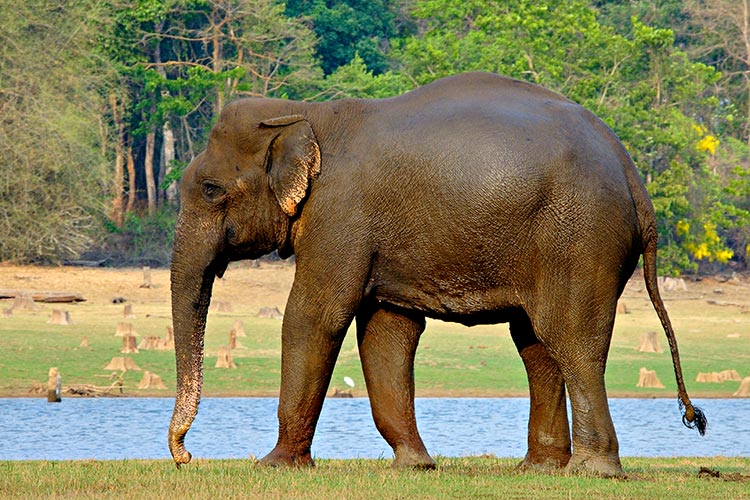
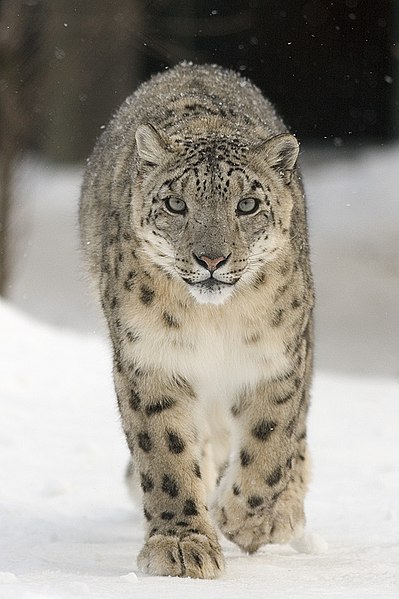
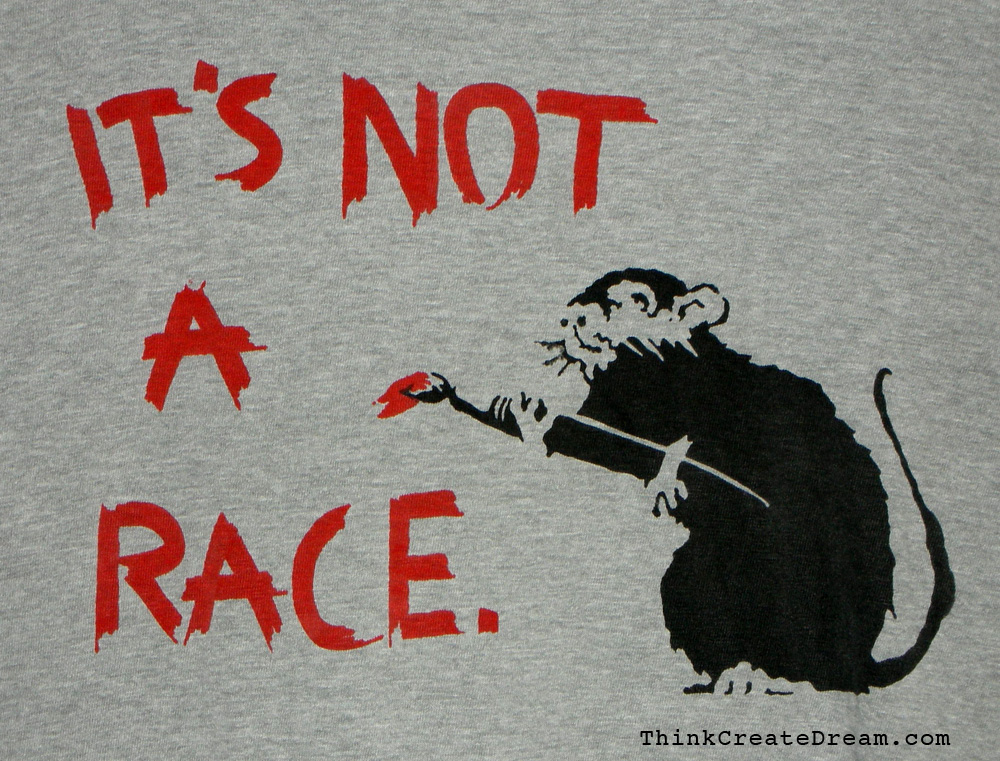
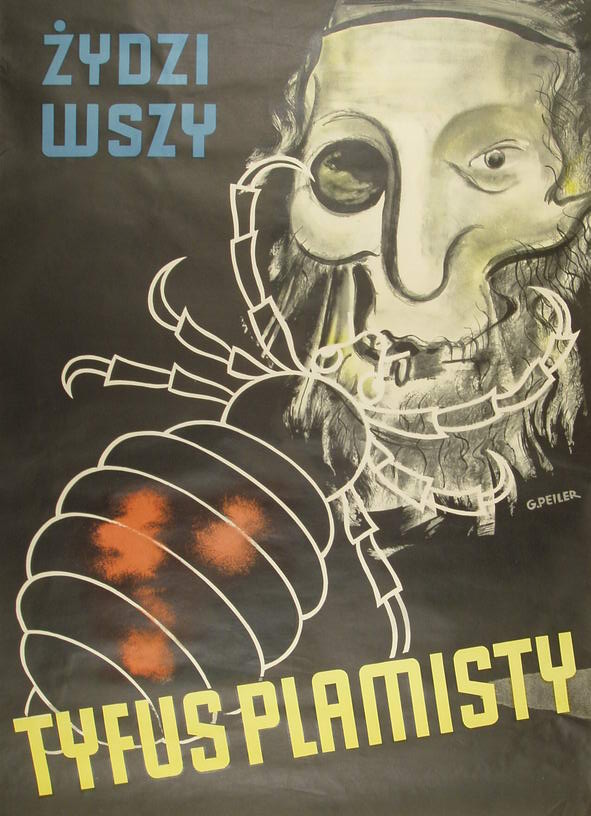
Volkan's discussion focuses on the second (State/mythic animals). We can think here of animals such as the Afghan snow leopard or the Indian Elephant, tiger or cobra, but also how these animals are used also by opposing groups (to attack, denigrate or demonise the animal-other, representing the alien group-other). Of course, many of these group animals are not 'chosen' by the group, but attributed by their enemies (eg. the attribution of jews as rats, or Tutsi's as cockroaches during their respective genocides). This symbolism can also be resisted and reused, such as in Banksy's use of rats in his graffiti, the US Republican Party's use of the elephant, and the various competing national lions and eagles. The various roles of such animals can lead to further understanding about the intersection between mental ecologies, social ecologies, and natural ecologies. 

Of course, there are major problems with this, do animals (or 'nature') have any real status beyond being carriers of human symbolic meaning? Are they just a backdrop for our projections? A tapestry to weave our dreams? What happens when the powerful symbolism of the tiger or the rhino lead them towards extinction as we use their body parts to for ineffective cures for everything from cancer to impotence. This is an issue I explore in more detail in part three of my book, The Ecology of Phantasy, in the context of Deleuze and Guattari's critique of Freud's approach to the Wolfman's dream (see also Freud's Bestiary: How Does Psychoanalysis Treat Animals? Genosko 1993). Nevertheless, whether we like it or not, we do use animals in this way, and they form an important part of the ecological imaginary, and Volkan's article is a good starting point to take this further.


 Vamık D. Volkan

Many national or ethnic groups’ identities are represented by animal symbols. For example, the lion symbolizes British collective identity, while Turks consider the gray wolf their national symbol. This phenomenon goes back to the beginnings of human history-people have always linked their own valued or feared characteristics, and attempted to divide and order experience, through the symbolic and totemic use of animal and plants in their environment.

 
The symbolic significance of animals is sometimes obvious and primal, such as those associated with fertility, warfare, wisdom, or specific behaviors, while in other cases animals are used as symbols for complex and abstract ideas and beliefs. Some primitive people collectively believed, for example, that an omnipotent lion of the heavens swallowed the sun and thereby brought on darkness each day (Biedermann, 1992). In ancient Egypt, Sekhmet, the goddess of war and defender of the sun god Re, was represented by a lion, and in Judeo-Christian tradition, the lion symbolizes both divine and evil power. The wolf has symbolic significance in Old Norse mythology, as well as in the ancient civilizations of Greece, Rome, China, and numerous other cultures, tribes, and ethno national groups. The Turks’ use of the wolf dates back thousands of years to their early history in the steppes of Central Asia. 

In some cases the original significance of an ancient animal symbols within a large group or ethno national collective is difficult to pinpoint. In others, a certain animal was adopted by a leader and thereby elevated or resurrected as a unifying symbol. “Genghis Khan … claimed to be descended from a blue-gray ”chosen wolf” which itself was sired by the sky (Tenggri)” (Biedermann, 1992, p.387).  Adolf Hitler’s fascination and identification with a wolf also has been documented: “As a boy, he had been pleased to find that his given name was derived from the Old German ”Athalwolf” meaning noble “wolf” (Ehrenreich, 1997, p.212). Hitler named his favorite dog “wolf” and generalized his identification with this predator by calling the SS his “pack of wolves.” At times, he also believed that the German people followed him because they realized that “now a wolf has been born” (Waite, 1993, p.26).
 

Animals and other symbols in modern times also have come to represent large-groups through conventional agreement. A country’s animal and the symbols displayed on its flag are often chosen through a vote or general consensus, as are the birds and flowers of each state in the US. Sometimes such choices are the subject of intense debate, competition, and rivalry. But even when the process of such selections assumes seemly irrational proportions—indicating that large-group symbols are psychologically powerful things—in the end, like a red octagon that symbolizes “stop” the relation between signifier and signified is clear.  

In psychoanalysis, however, the concept of a symbol has a narrower meaning and focuses on how it originates in the unconscious. In The Interpretation of Dreams (Freud, 1900), and in his many other writings that followed, Freud understood symbols as a means of reducing anxiety by repressing unacceptable wishes or other derivatives of instinctual drives.  An individual is aware of the symbol itself, but unaware of what is symbolized. If someone dreams of a snake, for example, he sees an actual image of a snake, but the penis that the snake may represent is not consciously perceived. Initially, Freud believed that symbols representing body parts, body functions, birth, death, sexuality, and childhood intimate objects and relationships with parents and siblings are universal and are included in a kind of system of phylogenetic meaning.  Such a belief  “has now been largely replaced by the assumption that the recurrence of such symbols across cultures has to do with the similarity of human beings’ experiences and interests from infancy onward and of the cognitive processes involved in symbol formation” (Moore and Fine, 1990, p.192).

 
Humans therefore share the need to use animal and other symbols and many are cross-cultural. Yet this generality is concurrent with specificity in regard to the symbols used by large groups. Neighboring groups typically do not have the same animal symbol, even if they share many other historical, religious and linguistic characteristics. When large groups do share a symbol such as the lion, one ethno national group’s lion has minor or major differences from another large group’s lion, and members may adamantly defend and justify the use of a lion to specifically symbolize their exclusive group identity. 

Many perspectives, including those of anthropologists, archaeologists, historians, sociologists, political scientists and others, are consequently needed to understand the origins, evolution, and perpetuation of animals’ symbols and their use by groups of people to define collective identity and other beliefs. Psychoanalytic approaches are useful as well in comprehending the complex and intertwined relationship of mankind’s internal and external world that we find expressed in animal symbols.

For example, while psychoanalytic insights alone may not help us understand why a certain large group chose a specific animal symbol thousands of years ago, and what it consciously and unconsciously represented, they can more clearly explain how and why children in a given large group attach themselves to shared symbols and make them an extension of  their internal worlds. Volkan (1988, 1997, and 1999) studied this phenomenon through his concept of suitable reservoirs of externalized self and object images, which is useful in outlining the pre-oedipal beginnings of large-group identity.
 
For practical purposes, during the course of normal development, a child integrates his sense of self around the age of 36 months and develops his core individual identity. This integration, however, is not a total process. Some images of the self as well as internalized objects, both “good” (libidinal determined) and “bad” (aggressively determined), remain unintegrated at this early age.  Because these unintegrated images threaten to destabilize the established core identity, they must be disposed of.

The child utilizes many ways of dealing with unintegrated self and internalized object images and an emotion attached to them (Kernberg, 1976; van der Waals, 1952), and employs many mechanisms ranging from splitting and denial to repression for this purpose. Among the spectrum of mechanisms, those of externalization are critical and ubiquitous. The caretakers in the child’s environment consciously and unconsciously direct the child to externalize his or her unintegrated self and internalized object images onto certain items in their environment. These items already have been accepted by the caretakers as amplifiers of their own cultural, ethnic, or national sentiments, such as a horse and cowboy hat for an American boy. They become suitable reservoirs to absorb children’s externalized and unintegrated “good” images. Unintegrated “bad” images are externalized onto other items, often those that belong to “others” or enemies.  

When one large group’s animal symbol becomes a “good” suitable reservoir for all children belonging to this large group, it creates an invisible network that links the children together. “Good” suitable reservoirs—whether they are animal symbols or other items—become a large group’s marker without children being aware of this process. 
Suitable reservoirs, although they bear some resemblance to transitional objects (Winnicott, 1953), belong to a different phase of life and have different functions. The latter is chosen by the child himself or herself and has a specific meaning only for that child.  Suitable reservoirs are offered to children by adults belonging to a specific large group and become the foundation on which more sophisticated ideations and affects concerning ethno national identity and large-group belonging will be built. It goes without saying that, as children of the same large group grow, they also attribute more sophisticated meanings to their animal symbols and such meanings are condensed into the original function of the suitable reservoir.

Large-group animal symbols which are used as childhood suitable reservoirs have intimate relationships within all children’s, as well as adult’s, internal worlds. Therefore, when a large group regresses (Loewenberg, 1995), individuals may experience large-group animal symbols as “protosymbols” (Werner and Kaplan, 1963)—as if they are one’s large-group identity. Thus, any attack on an ethnic, national, or religious group’s animal symbol (as well as other symbols which originate as suitable reservoirs) is perceived by those belonging to that large group as personal attacks damaging their large-group identity.

During the Cold War period, for example, Americans and the Soviets exhibited exaggerated emotional investment in their respective animal symbols. The enemy’s symbol was either devalued or rendered dangerous while one’s own large-group symbol was invested with idealism. Americans characterized the Russian bear as a vicious, devouring, castrating, or murdering animal, while Soviets portrayed the American eagle as representing a combination of maliciously carnivorous and greedy morality with exhibitionistic phallic activity. Such depictions invoked anger and were considered deeply offensive by the respective sides. 
 
Animal symbols are also used in a pathological way to dehumanization an enemy (Bernard, Ottenberg, and Redl, 1973) during war or war like situations. In such cases, one large group regresses and begins to utilize protosymbols of the enemy as their shared “bad” suitable reservoir (Volkan, 1997, 1999). First, the enemy is demonized but still is perceived as retaining human qualities, although they are predominantly negative human qualities.  Later, those of an enemy group may be rendered as vermin or a loathsome animal that must be exterminated, or a cancer that must be excised “for the sake of humanity.” In Rwanda, Hutu first referred to Tutsi as evil people and later began calling them "cafards," meaning cockroaches (de Swaan, 1996).

Many readers also may recall reports of symbolic dehumanization associated with the Iraqi invasion of Kuwait, and the behavior of Iraqi troops in Kuwaiti City’s zoo. With no one to feed or care for the animals displayed there, many suffered terrible deaths, or were believed to have been eaten by Iraqi soldiers. These stories were prevalent among Kuwaitis after the war, and reflected their belief that the Iraqi soldiers were less like humans and more like savage and predatory animals. Conversely, other stories involved reports that Iraqi soldiers locked some Kuwaiti women, whom they had raped, in empty zoo cages and exhibited them naked as if they were animals.

On the other hand, a regressed large group may utilize animal symbols in a reparative or adaptive rather than destructive way. For example, Cypriot Turks chose parakeets as a “good” suitable reservoir (Volkan, 1976, 1988), during the tumultuous period following Britain’s withdrawal from the island in 1960.  Although independence brought hopes for a new future, Cypriots continued to consider themselves either Greek or Turkish, and within three years a bloody conflict broke out between the two groups. Between 1963 and 1968, Cypriot Turks were forced to live in increasingly small enclaves that became more like prisons or ghettos. During this traumatic period of their history, they raised hundreds and hundreds of parakeets, whose cages hung everywhere—at homes, at grocery stores, at coffee shops. The Cypriot Turks were preoccupied with the birds and obsessively kept track of which ones were fertile, which was the mother of other birds, which one was crippled, and so on. 

Originally the birds symbolized the victimized, imprisoned Turks—by externalizing their “bad” aspects, the people could tolerate living in subhuman conditions. But Cypriot Turks went one step further, and by giving the parakeets positive attributes they turned these symbols into “good” suitable reservoirs. The parakeets came to represent their hopeful, good parts—as long as the birds were fertile and sang happily, Cypriot Turks unconsciously felt assured that they themselves could survive imprisonment. 

In 1968, the political situation on the island changed with the intervention of Turkish troops, and Cypriot Turks could leave their enclaves.  The utilization of birds as suitable reservoirs ended and parakeets, which are not native to the island, also disappeared, although some continued to be kept as ordinary pets. This brief example and the others mentioned here indicate that animals figure prominently in the relationship between human’s inner and outer worlds, and such themes will be further explored in this volume. 

REFERENCES:
1- Bernard, W.W.; Ottenberg, P., and Redl, F. (1973.) Dehumanization: A Composite Psychological Defense In Relation To Modern War. In Sanctions of Evil: Sources of Social Destructiveness, (Eds.), N. Sanford, and C. Constock, pp.102-124. San Francisco: Jossey-Bass.
2- Biedermann, H. (1992.) Dictionary of Symbolism: Cultural Icons and the Meaning Behind Them, tr. J. Hulbert, New York: Facts on File.
3- de Swaan, A. (1996.) Widening Evils of Disidentification: On the Psycho-and Socio-genesis of the Hatred of Distant Strangers: Reflections on Rwanda. Paper presented at Civilization and Its Enduring Discontents:Violence and Aggression in Psychoanalytic and Anthropological Perspective meeting. Bellagio, Italy, September 4.
4- Ehrenreich, B. (1997.) Blood Rites: Origins and History of the Passions of War. New York: Metropolitan Books.
5- Erikson, E.H. (1956.) The Problem of Ego Identification. Journal of the American Psychoanalytic Association, 4:56-121.
6- Freud, S. (1900.) The interpretation of dreams. Standard Edition, 4 and 5. London: Hogarth Press,1961.
7- Howell, W.N. (1995.) “The Evil That Men Do…” Societal Effects of the Iraqi Occupation of Kuwait. Mind and Human Interaction, Vol.6:150-169.
8- Kernberg, O.F. (1976.) Borderline Conditions and Pathological Narcissism. New York: Jason Aronson.
9- Loewenberg, P. (1995.) Fantasy and Reality in History. New York: Oxford University Press.
10- Moore, B.E., and Fine, B.D. (1990.) Psychoanalytic Terms and Concepts. New Haven: American Psychoanalytic Association and Yale University Press.
11- Saathoff, G.B. (1995.) In the Halls of Mirrors: One Kuwaiti’s Captive Memories. Mind and Human Interaction, Vol.6:170-178.
12- Saathoff, G.B. (1996.) Kuwait’s Children: Identity In the Shadows of the Storm. Mind and Human Interaction, Vol.7:181-191.
13- van der Waals, H.G. (1952.) Discussion Of the Mutual Influences In the Development of Ego and Id. In Psychoanalytic Study of the Child, 7:18-19.
14- Volkan, V.D. (1976.) Cyprus—War and Adaptation. Charlottesville, VA: The University Press of Virginia.
For more of Volkan's writings, see: http://www.vamikvolkan.com

Wednesday, 4 January 2012

Some nourishment for your mental ecology


As well the book above I include below some key works to nourish your mental ecology.
This will be added to and developed over time.


Ecotherapy and Ecopsychology


Dark Ecology


Complexity and Chaos Theory in Psychoanalysis


Complexity and Chaos Theory in Biology


Ecophilosophy