Wednesday, 13 June 2012

Approaching a State Shift in Earth’s Biosphere


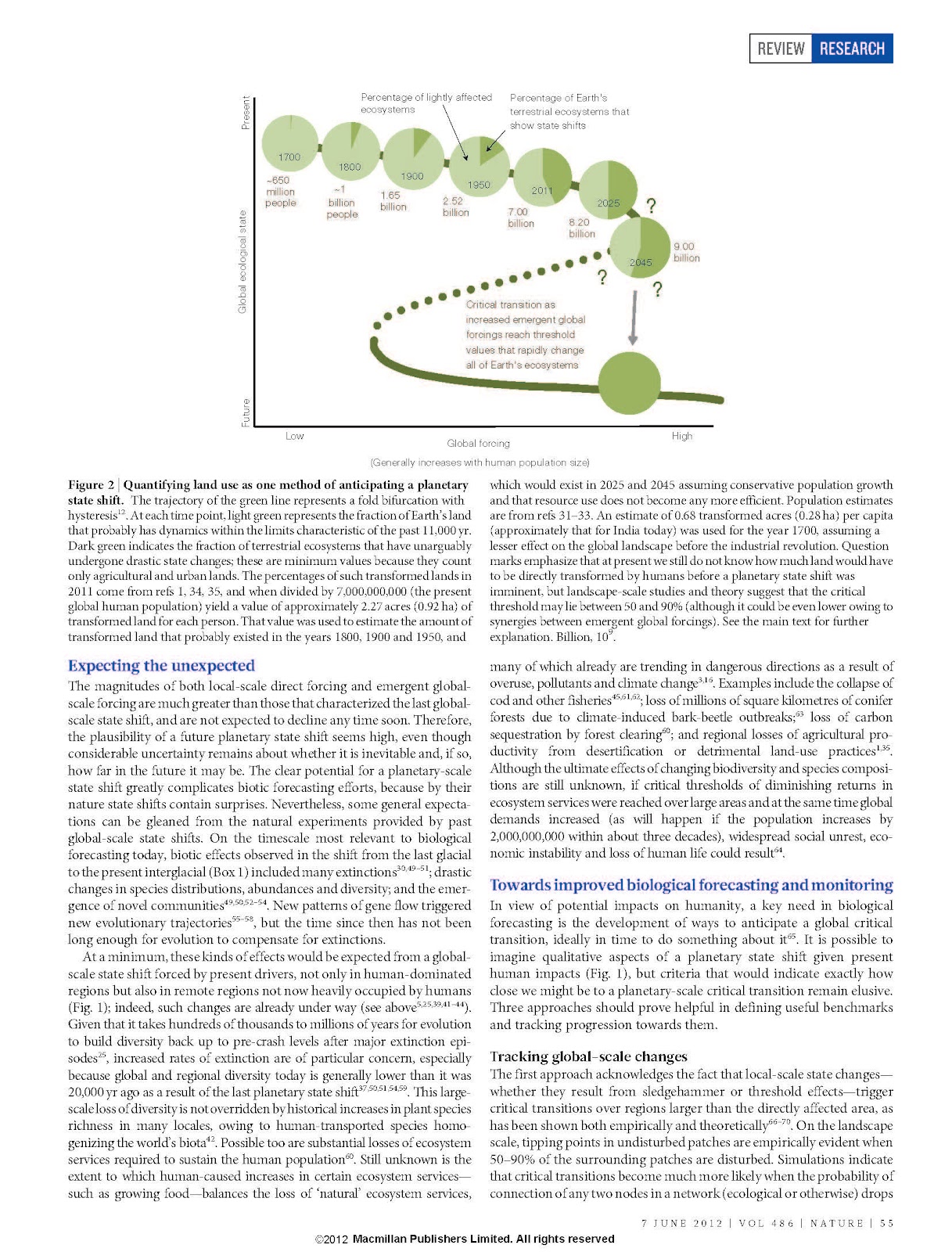
Below is a very important new paper from Nature. http://www.nature.com/nature/journal/v486/n7401/full/nature11018.html See also the full pdf: http://t.co/JziBOk4o

It underlies more clearly the various nonlinear effects, fold bifurcations, hysterisis, and state shifts (both 'threshold' and 'sledgehammer') involved in the ecological crisis. We need a state shift in mental and social ecologies, and for them to occur sooner than the predicted global collapse in natural ecologies, which appear to be reaching self-organised criticality.  


Monday, 4 June 2012

Derrida, Deleuze, Lacan and Žižek on Animality (Videos and Discussions)

Having just discovered Derrida's (2008) The Animal That Therefore I Am, I posted Christopher Higg's notes/review in the previous post. Here are two more: And Say The Animal Responded– A Response (Fragments, 2011), and Animal Tracks (Kari Weil, H-Animal, 2008) plus a video of Derrida discussing the question of 'the animal'.


We can compare this to Deleuze's 'A is for Animal'. See text here: See also this discussion on the status of animality in Deleuze's thought from Alain Bealieu (2011)


Both Derrida and Deleuze were to some extent engaging with and critiquing Lacan's position, some of which is captured in this video (especially at the start).


In this recent talk in Berlin (2011), Žižek engages with both Derrida and Lacan, specifically with Derrida's 'The Animal Which Therefore I Am' discussed above, as well as Žižek's usual heterogenous mix of concerns. Žižek's talk has been contrasted with his previous description of vegetarians as 'degenerates'. See for example Northern Song.

Sunday, 3 June 2012

Derrida’s The Animal That Therefore I Am (Higgs 2010)

http://htmlgiant.com/random/notes-on-derridas-the-animal-that-therefore-i-am/ 

Notes on Derrida’s The Animal That Therefore I Am (Higgs 2010)


Published in French in 2006, two years after his death, this book is a long lecture (which actually turned into a ten-hour seminar) that he wrote for the 1997 Cerisy conference on his work titled “The Autobiographical Animal.”
Here Derrida sets his sights on the philosophical problematic of the animal. Specifically, he is interested in exploring the limits of that interstitial space between that which we call animal and that which we call human. He coins the neologism “Limitrophy” to describe this exploration, “Not just because it will concern what sprouts or grows at the limit, around the limit, by maintaining the limit, but also what feeds the limit, generates it, raises, and complicates it. Everything I’ll say will consist, certainly not in effacing the limit, but in multiplying its figures, in complicating, thickening, delinearizing, folding, and dividing the line precisely by making it increase and multiple.” (29) He predicates this line of inquiry on his assertion that the entire history of philosophic discourse from Aristotle to Heidegger is guilty of misrepresenting or misinterpreting the basic ontological difference between that which we call animal and that which we call human.

He opens with a discussion of the Genesis myth, focusing on the way in which Adam is naked in the garden until he eats the fruit from the tree of knowledge. Instead of the typical reading of this action as a fall from grace, Derrida sees this as the inciting incident for the creation of humanity. Recognition of nudity, and the shame associated with it, is particularly interesting to Derrida because, as he puts it, “In principle, with the exception of man, no animal has ever thought to dress itself. [Thus] clothing would be proper to man, one of the ‘properties’ of man. ‘Dressing oneself’ would be inseparable from all the other figures of what is ‘proper to man,’ even if one talks about it less than speech or reason, the logos, history, laughing, mourning, burial, the gift, etc.” (5) These “properties of man” are the sites he wants to push against in this lecture.


In his trademark elliptical, recursive, persistently deferring style, he raises this issue of being naked in front of that which we call animal, what it means to be naked, how that which we call animal cannot be naked, what it means to be seen by that which we call animal, and what it means for a human to see themselves in the eyes of that which we call animal.

N.B. this phraseology “that which we call animal” instead of the simpler term “animal.” This is purposeful. For Derrida, the fact that we refer to all living creatures that are not human as “animals” is absurdly reductive. He makes a good point. Lumping together the cricket and the whale, the mountain lion and the parakeet, the giraffe and the marmot, seems lazy and dismissive, yet, as Derrida points out, this is exactly what philosophers from Aristotle to Heidegger are guilty of doing. And part of his project is to shine a light on this unexamined assumption.

Take Heidegger, for example. As Derrida shows, Heidegger delineates three ontological positions: the living being (which is separated into the animality of the animal and the humanity of the human) and the nonliving being. So, for Heidegger, you are either a nonliving being (the example he uses is a stone) or a living being, of which there are only two kinds: animal and human. According to Heidegger, the determining distinction between the animal and the human is the ability to die. Animals, Heidegger argues, come to an end but do not die. By the same token, “A dog does not exist but merely lives.” Humans, on the other hand, have “the living character of the living being,” by which he seems to mean logos and/or the awareness of mortality and/or the ability to manipulate existence and/or the ability to choose death. Heidegger’s specific wording for these distinctions are, “the stone is wordless, the animal is poor in the world, man is world-forming.” Of the various objections Derrida raises to Heidegger’s argument, the one that resonates most powerfully with his project of limitrophy is his assertion that the binary division between human and animal falls vastly short of representing the multiplicity of difference between various species. (On a personal note: I read Derrida’s argument regarding the need to move beyond the univocal signifier “animal” as akin to the annoying error so often made when someone generalizes about “Africa”: not taking into account the immense geographic, historic, political, social, and cultural diversity of the continent.)

Another site for Derrida’s limitrophy is Lacan’s position vis-à-vis the difference between that which we call human and that which we call animal. For Lacan, it should be no surprise, what separates the two is language. It is a difference between response and reaction. Animals, Lacan argues, do not respond to questions; they react to stimuli. They do not have a language, rather, they use a coded system of signaling, which is a fixed program, as opposed to the dynamic, symbolic interaction of the human. He uses bees as an example: the dance of the bee who returns to the hive to direct others to where they might find nectar. Lacan claims that this dance is not an exchange in need of interpretation, as would be the case with humans, but is instead a kind of exchange of data from one (as Derrida puts it) Cartesian machine-animal to another Cartesian machine-animal. For the most part, Derrida is not as interested in refuting Lacan’s claim as much as he is interested in making porous the distinctions, again, exploring the limits, the threshold between response and reaction.

In terms of application, Derrida’s idea of limitrophy is of particular interest to me as a potential guiding methodology for exploring the posthuman (one of my current fields of inquiry) – and more specifically, for my major ongoing research interests, as a way to think and talk about experimental literature. If posthuman discourse can, in some ways, be considered an exploration of the categorical boundary separating the human from the non-human, I don’t see why that discourse can’t be grafted onto a discussion of the categorical boundary separating conventional realism and non-conventional realism.  Aren’t both programs reliant on the power engendered by the exclusivity of their (perceived) unique characteristics in order to demarcate them as foundational, separate, autonomous, sovereign? In other words, that which we call human seems analogous to that which we call conventional realism.  Perhaps, as posthuman discourse shows us the inherent flaw in such molar classification of the human, so too can this discourse show us the inherent flaw in conceiving of conventional realism as a molar classification.  Both that which we call human and that which we call conventional realism are porous, malleable, molecular — while at the same time they seem to present legible boundaries. Limitrophy offers a strategy for questioning the validity of those perceived boundaries by identifying gaps, spaces, discontinuities, through surveying the interstitial space between that which constitutes and that which deviates.

Friday, 1 June 2012

Engaging with Climate Change, Psychoanalytic Perspectives Conference Videos (Oct, 2010, Institute for Psychoanalysis, London, UK)

How does our knowledge of climate change affect our sense of identity? What might underlie issues of connection with, and disconnection from, the natural world? How do we understand the denial of climate change?

Speakers from the field of psychoanalysis explore these and other questions with scientists, environmentalists, writers, educationalists and policy makers. The conference aims to achieve a better understanding through interdisciplinary exchange. Click here to email us a question for the event.

1. "Great Expectations: some psychic consequences of the discovery of personal ecological debt", Rosemary Randall, with discussants Margaret Rustin and Bob Ward. Followed by a general discussion


2. "The myth of apathy", Renee Lertzman, with discussants Irma Brenman-Pick and Erik Bichard.


3. "Different structures of feeling in relation to the natural world", Michael Rustin, with discussants Jon Alexander and Ted Benton. 

 4. "Unconscious obstacles to caring for the planet", John Keene, with discussants Michael Brearley and Bob HInshelwood.

 5. "Engaging with the natural world and with human nature", Sally Weintrobe, with discussants Tom Crompton and Mike Hannis. 

6. "Climate change denial in a perverse culture", Paul Hoggett, with discussants Stanley Cohen and John Steiner. Followed by a general discussion.

7. Book launch: "Engaging With Climate Change: Psychoanalytic and Interdisciplinary Perspectives"

Why Science Education Won't Solve Our Climate Problems

Why Science Education Won't Solve Our Climate Problems

Important! But not the solution to climate change. 

Think the reason we can't address climate change is because people don't understand climate science? Think again: a new study suggests that people with higher scientific comprehension use their abilities not to disinterestedly parse the complicated details of climate science, but to better fit available evidence to their preexisting values and group identifications. A team of researchers associated with the Cultural Cognition Project at Yale Law School compared scientific literacy and numeracy with beliefs about climate change and value-laden worldviews for an article published this week in Nature Climate Change. Their conclusions? As individuals' scientific comprehension went up, concern about climate change declined slightly. That relationship isn't what you'd expect to see if ignorance about science explained a lack of concern about climate change, as the "scientific comprehension thesis" (SCT) would suggest; the graph below demonstrates the difference between what SCT predicts and how people actually responded.
SCT prediction versus actual impact of science literacy and numeracy on climate change risk perceptions.  Kahan et.al, Nature Climate ChangeSCT prediction versus actual impact of science literacy and numeracy on climate change risk perceptions. Kahan et.al, Nature Climate Change

But not everyone with greater scientific understanding was equally likely to be less concerned about climate change; the correlation split sharply depending on respondents' worldviews. As the study explains, "members of the public with the highest degrees of science literacy and technical reasoning capacity were not the most concerned about climate change. Rather, they were the ones among whom cultural polarization was greatest." While those results don't jibe with the SCT, they do make sense according something called the cultural cognition thesis (CCT), which suggests that people tend to perceive risks in a way that corresponds to the values of their identity groups.

Think about it: An oil worker who expresses concern about climate change may be mocked, while an English professor who calls climate science a hoax may be shunned. People therefore adjust their beliefs to fit those of others around them: according to the study, "public divisions over climate change stem not from the public’s incomprehension of science but from a distinctive conflict of interest: between the personal interest individuals have in forming beliefs in line with those held by others with whom they share close ties and the collective one they all share in making use of the best available science to promote common welfare." Or, as researcher Ellen Peters of Ohio State University puts it, "What this study shows is that people with high science and math comprehension can think their way to conclusions that are better for them as individuals but are not necessarily better for society."

More specifically, people with what the study identified as a "hierarchical individualist" worldview—one that values top-down authority—tended to see climate change as less of a risk as their scientific literacy and numeracy increased. On the other hand, people with an "egalitarian communitarian" worldview—one favoring "less regimented forms of social organization and greater collective attention to individual needs"—tended to perceive climate change as a greater risk as they gained scientific comprehension.
SCT prediction versus actual impact of the interaction between science literacy and numeracy, on the one hand, and cultural world-views, on the other.  Kahan et.al, Nature Climate ChangeSCT prediction versus actual impact of the interaction between science literacy and numeracy, on the one hand, and cultural world-views, on the other. Kahan et.al, Nature Climate Change

In short, when it comes to climate change, people tend to accept or reject scientific information based upon whether it threatens or supports their existing values and relationships, and the effect is stronger among those who are better able to understand the implications of that information for their values. The researchers' conclusions suggest that climate change is fundamentally a political issue, not simply a technical problem or information gap. They also suggest that green-minded efforts to educate climate change deniers in hopes of getting them to change their views are naive at best.
People who don't believe in climate change aren't merely ignorant, uneducated, or anti-science; on the contrary, many of them are actually pretty good at assessing their (at least short term) interests and evaluating threats to them. That means we can't ignore the political and value questions associated with climate change—any strategy that assumes everyone with adequate scientific education will reach the same conclusions is doomed to fail.

The study's lead author, Dan Kahan, a law professor at Yale, thinks that information about climate has to do more than simply communicate "the facts": rather, it has to "create a climate of deliberations in which no group perceives that accepting any piece of evidence is akin to betrayal of their cultural group." In other words, people have to feel that being concerned about climate change won't result in them becoming ostracized by their social groups. The study suggests that it may be effective to use "culturally diverse communicators" who have credibility in different communities and are able to talk about climate change in less threatening ways. (In other words, don't expect Al Gore to convince Rush Limbaugh listeners to care about climate, no matter how good his graphs are.)

But those kinds of communicators are few and far between; Fox News, for example, is already spinning the study's findings to validate climate denialism. Moreover, while better communication might help reach some people, what happens when climate solutions actually do present a threat to certain worldviews and values, as some certainly will? This study doesn't answer those questions. But it does suggest that some of the dominant narratives about why we aren't dealing with climate change are lacking.

Friday, 23 March 2012

Complexity, Psychoanalysis, and Society: A One Day Conference at the Tavistock Centre. May 18


Tavistock Policy Seminars
‘Connecting public policy and human relationships’
 
Complexity, Psychoanalysis and Society
 
A Day Conference to be held on Friday May 18 2012
at the Tavistock Centre,120 Belsize Lane NW3 8BA


Andrew Cooper, Joseph Dodds, Margaret Lush, 
Michael Rustin, Graham Shulman, Terry Marks-Tarlow

Complexity theory is one of the most interesting and challenging perspectives on the explanation of behaviour in the natural, psychological and social worlds to have emerged in recent years. This Policy Seminar day conference will explore ‘complexity’ approaches in the field of psychoanalytic and psychotherapeutic practice, and in their wider application to social issues such as climate change.
 
Speakers will include Terry Marks-Tarlow (Los Angeles), author of Psyche’s Veil: Psychotherapy, Fractals and Complexity (Routledge 2008); Joseph Dodds (Prague), author of Psychoanalysis and Ecology at the Edge of Chaos, (Routledge 2011); Graham Shulman, child psychotherapist, Scotland; Margaret Lush, child psychotherapist, England; (each authors of journal articles on complexity theory in child psychotherapy) and Andrew Cooper, Professor of Social Work at the Tavistock Clinic and co-author with Julian Lousada of Borderline Welfare (Tavistock Clinic Series/Karnac, 2005).


Conference Programme
9.00 – 9.30 Arrival and conference registration
9.30 – 10.15 Terrry Marks-Tarlow: ‘Psychotherapy, Fractals and Complexity.’
10.15 -11.00 Open discussion
11.00 -11.30 Coffee break
11.30 – 12.30 Graham Shulman: Strange attractors in the dynamical systems of the mind.’
Margaret Lush: ‘Clinical facts, turning points and complexity theory’.
12.30 – 1.00 Open discussion
1.00 – 2.00 Buffet lunch in Tavistock Cafe
2.00 – 3.15 Joseph Dodds ‘Psychoanalysis and ecology at the edge of chaos.’
3.15 – 4.00 Open Discussion
4.00 – 4.30 Tea break
4.30- 5.30 Final plenary discussion, introduced by Andrew Cooper
5.30 – 6.30 Drinks reception
 

Conference Booking
 
There will be a charge for the Day Conference of £30, which will include coffee, tea, lunch and the drinks reception.
 
Bookings should be made to Simone Silverstein: ssilverstein@tavi-port.nhs,uk. You can book a place by email, but please send her a cheque made out to ‘The Tavistock and Portman NHS Foundation Trust’. Address: Simone Silverstein, Child and Family Directorate, Tavistock Centre, 120 Belsize Lane, London NW3 5BA

Sunday, 11 March 2012

5th International Nonlinear Science Conference, 15-17 March 2012, University of Barcelona, Spain. Society for Chaos Theory in Psychology & Life Sciences


I will be presenting on my book next week at the following conference in Barcelona, organised by the Society for Chaos Theory in Psychology & Life Sciences: 


The principal aim of the INSC is to provide a scholarly environment conducive to promoting exchanges between an array of disciplines to facilitate research and related academic activities in collaboration with colleagues worldwide.


The topics covered by the conference include applications of nonlinear dynamical systems theory and techniques to problems encountered in any area of the behavioral, social and life sciences including psychology, sociology, economics, management sciences, anthropology, aesthetics, education, biology, physiology, ecology, neuroscience and medicine. One or more of the following nonlinear concepts must be an explicit part of the presentation: attractors, bifurcations, chaos, fractals, solitons, catastrophes, self-organizing processes, cellular automata, agent-based models, network analysis, genetic algorithms and related evolutionary processes, econophysics, dynamical diseases, or closely related constructs. The broad mixture of the disciplines represented here indicates that many bodies of knowledge share common principles.


Contributions from other disciplines such as computer science, mathematics and engineering are also welcome provided the main focus of the paper is an application of nonlinear science in the behavioral, social or biological sciences.

Areas covered by the conference include: complex organizations, methods, epistemology, psychological processes, health and public policy, economy and finance, emotion and motivation, physiology and biology, social issues, education and development, nonlinear dynamics of the psychobiological adaptation to exhausting exercise, nonlinear models of processes in psychotherapy and psychopathology, work and management, stimulating evolution in human systems with compelling complexity metaphors.

Jose Navarro, Ph.D., Faculty of Psychology, University of Barcelona, Spain
Dimitrios Stamovlasis, Ph.D., Faculty of Philosophy, University of Thesseloniki, Greece
Stephen J. Guastello, Ph.D., Professor of Psychology, Marquette University, Milwaukee, WI USA
David Pincus, Ph.D., Assoc. Professor of Psychology, Chapman University, Orange, CA USA and President, Society for Chaos Theory in Psychology & Life Sciences.


I will be presenting on my book

Other speakers include:


Peter Allen
Complex Systems Research
Cranfield School of Management, UK
 

Complexity, Understanding and Evolution

In hard science a new theory must be capable of being falsified, and therefore must produce testable predictions, which can lead to genuine cumulative knowledge within the domain where repeatable experiments are possible. In complex systems however, our understanding is based on less severe selection criteria, as repeatable experiments and exactly comparable situations and histories never really occur. Living systems create a world of connected, co-evolved, multi-level structures which although temporally, sufficiently self-consistent to ‘operate’ for a time, will inevitably evolve, adapt and change over longer periods. We shall present a number of real-world examples where successful emergence and persistence of structure and organization requires not only elements that obey the current rules but also internal layers, elements and individuals who, while inhabiting the current structure, have their own ideas about how satisfactory it is, and the freedom to try new ideas. Complexity therefore leads to temporally stable, paradoxical systems that include heterogeneous elements and layers with multiple views and perspectives. Instead of a single knowledge and truth we will find diverse beliefs and habits. Of course, strategy can gain from the imagination and modelling of new possibilities, and an attempt to evaluate different options. But if such models are believed (e.g. climate change) then they can and do change the behaviour that is included within them and become part of the political reality as. We will briefly illustrate these ideas for problems of social, economic and environmental change as well as such technical issues as electricity distribution and Smart Grids.
Peter Allen is the founder of the Complex Systems Research centre at the Cranfield School of Management, UK. PhD in Theoretical Physics, was a Royal Society European Research Fellow 1969 - 71 and a Senior Research Fellow at the Universite Libre de Bruxelles from 1972 – 1987. He has written and edited several books (for example, The SAGE Handbook of Complexity and Management edited jointly with Steve Maquire and Bill McKelvey London, Sage, 2011) and published well over 200 articles in a range of fields including ecology, social science, urban and regional science, economics, systems theory, and physics. Currently he is the Editor in Chief of Emergence: Complexity and Organization.

Albert Diaz-Guilera, Ph.D.
 Full Professor at Departament de Física Fonamental
University of Barcelona, SPAIN
Networks of Networks
ABSTRACT: Complexity spans over different scales, ranging from the atom to the large scale of the galaxies forming intricate geometric patterns. Complex emergent behavior can have different origins, but nowadays it is clear that beyond nonlinear interactions between units, a key role is played by the topology of interactions, forming networks of connections at all levels. Moreover, networks at different levels are interacting. In this talk we will review the different levels of description in living systems at which we find complex networks and show how they emerge at different scales and how they interact. This ranges from cellular scale by means of metabolic or gene regulatory networks to networks of individuals, like Facebook or Twitter, in our modern communicate society, or networks of interacting species in complex ecosystems.   
Albert Diaz-Guilera got his degree in Physics at Universitat de Barcelona (1983). PhD in Science at Universitat Autonoma de Barcelona (1987). Postdoctoral stays in Gorlaeus Laboratories (Leiden, The Netherlands) and "Centre de Physique de Solide" (Sherbrooke, Canada). His research is currently focused on general aspects of complexity, particularly in complex networks. Being by education a statistical physicist, his research lines had been broadening to cover aspects in many different fields: biology, economy, social sciences, computer science, linguistics. Direct collaborations with scientists with different backgrounds have been possible by means of stays in different centers (Mathematics at Imperial College London, Chemical and Biological Engineering at Northwestern University, Ecologia UNAM, Potsdam Institute of Climatogy, Potsdam Psychology, Sociology at ETHZ). Author of more than 70 articles in physics and interdisciplinary journals. He has given about one hundred of talks at conferences and research centers. Leader of the research group PHYSCOMP2, PI of projects from Catalan and Spanish Governments and EU. Coordinator of the Spanish network "Econosociofisica: Dinámica y fenómenos colectivos de sistemas socioeconómicos". Currently is Deputy Spokesperson of the Spanish node of the European Flagship iniciative "FuturICT".

David Pincus, Ph.D.
Associate Professor of Psychology
Chapman University, Orange, CA 
Complex Biopsychosocial Dynamics, Behavioral Medicine,
and Psychotherapy
ABSTRACT: Complexity science offers a new, broader paradigm for understanding and intervening in developmental processes within and across personality and social dynamics.  This address will begin with a review of empirical results applying nonlinear dynamics to the understanding of relationship development and group dynamics, with an emphasis on understanding the functional roles of rigidity and flexibility in health.  Noteworthy conclusions from this line of research are that relationship structures appear to be self-organizing and fractal, with higher complexity generally associated with health.  Next, we will examine complementary evidence for self-organization in personality structure, again with complexity operating as an index of health.  Finally, these lines of research will be integrated within a general model of self-organization in biopsychosocial resilience.  The aim of this general model is to guide future research applying nonlinear dynamics to health research, as well as to inform the development of novel interventions in psychotherapy and behavioral medicine.
Dr. David Pincus began his career in 1991 as a youth and family therapist working in public mental health in WaukeshaWisconsin. He obtained his M.S. and Ph.D. in Clinical Psychology at MarquetteUniversity, followed by a clinical postdoctoral fellowship at the University of California Davis Department of Psychiatry. Currently, Dr. Pincus is an assistant professor within the faculty of psychology in the school of health sciences at ChapmanUniversity, the director of The Francis L. Smith Community Clinic, and licensed psychologist in private practice. He is the author of the recent book applying NDS to imagery-based psychotherapies: Imagery for Pain Relief: A Scientifically Grounded Guidebook for Clinicians. He also served as a co-editor for Chaos and Complexity in Psychology: The Theory of Nonlinear Dynamical Systems (Cambridge Univ. Press). In addition, Dr. Pincus has produced numerous other publications (e.g., journal articles, book chapters, workbooks, and instructional videos) to diverse topic areas in clinical psychology.

Jorge Wagensberg, Ph.D. 
Director,
Science Museum of Barcelona
Barcelona, Spain
Individuals versus individualities: A Darwinian Approach
ABSTRACT: The idea that natural selection acts on many levels -and not only at the level of organisms or individual genes- is increasingly accepted among biologists. However, it is not easy to reconcile this idea with the strictly "individualistic" conception of the evolutionary process that has always characterised Darwinian thought. In addition, the individuality of some forms of life is a vague concept and, therefore, it is controversial. This is the case of Candidatus Magnetoglobus multicellularis which discovery immediately inspired the following question: Does the concept of individuality have degrees? Alternatively, how far is this structure of prokaryotic cells from deserving to be called an organism? In this paper, we propose a new conceptual scheme based on an idea of individuality that is not limited to organisms and that makes sense in terms of Darwinian evolution. In this conceptual scheme, selection at levels above that of the individual-organism is interpreted as the evolutionary emergence of higher level individuality. This proposal may serve as a basis on which to construct an eventual hierarchical evolutionary theory.
Jorge Wagensberg, Doctor of Physics, is professor of Irreversible Process Theory at the University of Barcelona. He not only investigates and disseminates science, but is also a dynamic promoter of the debate of ideas, which has achieved him Catalonia’s National Prize for Scientific Thought and Culture, among other awards. He is the director of Metatemas collection and responsible for the Scientific and Environmental Area of the “la Caixa” Foundation, after having directed the scientific museum CosmoCaixa, a reference for science museums around the world. He is the author of a dozen books and of many works of investigation on thermodynamics, mathematics, biophysics, microbiology, paleontology, entomology, scientific museology, and the philosophy of science, as well as of journalistic articles on a number of different topics.


Monday, 13 February 2012

Nature Crisis Conference March 17, The Eden Project, Cornwall

The SITE Annual Conference ‘Nature Crisis’
March 17th 2012, The Eden Project
 
Weblink: http://www.the-site.org.uk/index.php?option=com_content&task=view&id=216&Itemid=54
 
We live in a time where our human nature – who or what we are – is understood to threaten the place we inhabit – nature itself. Whether we are destroying the rainforests or building sustainable communities, we can’t stop making ourselves central to the current environmental ‘crisis’. This conference will be an exploration of this‘crisis’ in our relationship with the environment.
Drawing from a range of philosophical and psychoanalytical approaches, this conference will suggest that there might be better and potentially more liberatory ways to understand the current catastrophic relationship we have with the natural world.
 
We are excited to be holding our conference at the beautiful Eden project – a rich global garden which aims to create projects which are socially and environmentally transformational. We will be using the Gallery space, overlooking the Eden landscape. There will be an opportunity for participants to meet up informally at the end of the day for a drinks reception in the colourful and evocative surroundings of the Mediterranean biome. The Eden project is near to St Austell in the heart of the county:
 
Eden Project
Bodelva
St Austell
Cornwall PL24 2SG
 
Sitegeist, The Site journal is devoting its Spring 2012 edition to environment and psychoanalysis. This will be available at the conference and will include some of the papers presented on the day, as well as other thought-provoking contributions.
 
The Site runs a UKCP registered training in clinical psychoanalysis in both Cornwall and London.
 
CONFERENCE PROGRAMME
9.30: Registration
10.00: Welcome – Stephen Gee, Chair of the Site
10.10: Introduction to the Conference - Philip Derbyshire, Conference Chair
10.30 - 11.30: Uncivilisation - Paul Kingsnorth
11.30 – 12.00: COFFEE
12.00 - 1.00: Parallel Sessions
‘Directly’: Consumerism, Psychoanalysis and Cultures of the Countryside : Sally Sales
Landscape as Psychic Loss: Framing Nature in the 21st century: Ilric Shetland
The Myth of the Clinic: Psychoanalysis Beyond the Human: Margot Young
1.00: LUNCH
2.00 - 3.00: Derek Jarman's Gay Georgic - Greg Garrard
3.00 - 3.15: TEA
3.15 - 4.15: Parallel Sessions
How to be: Wishful drives without limit in a limited world - Paul Zeal
The Environmental Crisis and the Death Drive: Must we make the planet face its death before we can accept ours? - Joe Suart
Queering Nature - Phillip Derbyshire, Stephen Gee & Greg Garrard
4.15: Short Plenary
4.45: Close and concluding chair's remarks
5.00 – 7.00 Drinks reception in the Mediterranean Biome, at Eden 
 
To Book: 
Please send your cheque, payable to The Site , together with this completed form to: 
The Administrator,
The Site,
35 Manor Road,
Potters Bar, EN6 1DQ. 
For booking enquires the Site office can be contacted on: the-site@the-site.org.uk or 01707 649788 

Conference full fee £75/ Students/unwaged £50 (please indicate)
 
Full name:
Email:
Tel- Home:
Mobile:
Address:
Postcode:
For information on accommodation in the area, see the link, www.eden-project.co.uk/places-to-stay.htm 
For further general enquires Sally Sales can be contacted on 01726 870169 or  sitesouthwest@the-site.org.uk

Sunday, 15 January 2012

Animals as Large-Group Symbols (Volkan and Ecopsychoanalysis)

In my book on psychoanalysis and the environmental crisis (especially part three) I include a reflection of the psychological function of the animal from fairy tales to horror films, pets to animal phobias, ideology and human-nature relationships. I explore this in the context of emerging ecological relations, which develop alongside object relations and narcissistic relations, and human culture's relationship to the non-human world of nature. This is framed within an psychoanalytic, group analytic, ecological and Deleuze-Guattarian (becoming-animal) perspective.

Below is an fascinating article I have just discovered from Volkan, an expert on 'large-group' dynamics, exploring the function of the animal in the context of national and group symbolism. This would fit within Deleuze and Guattari's tripartite classification of animals into: 1. Oedipal (individuated, pet) animals, 2. State (mythic) animals, 3. Pack (wild, nomadic) animals.

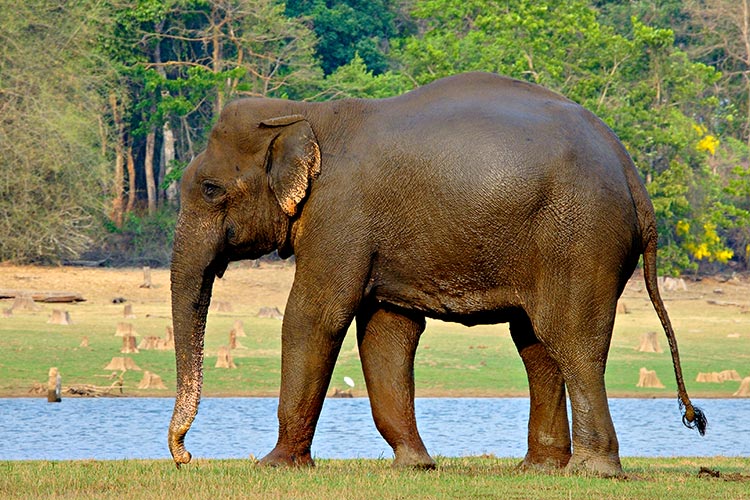
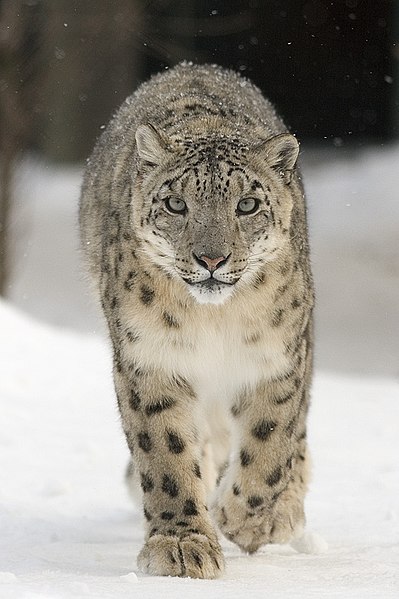
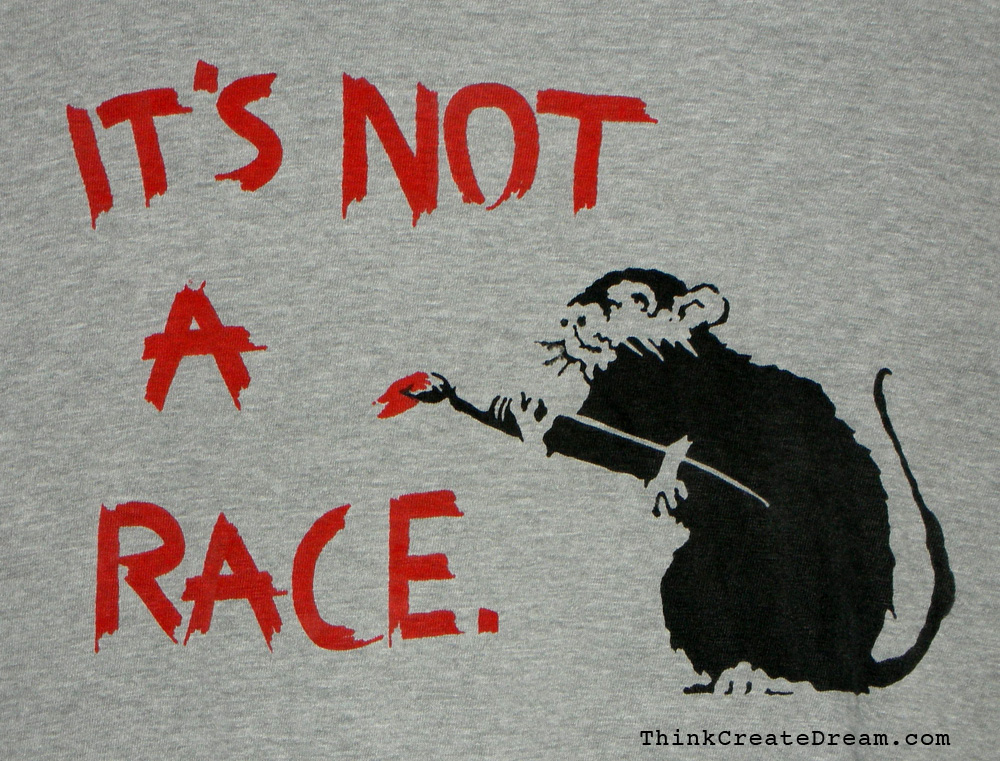
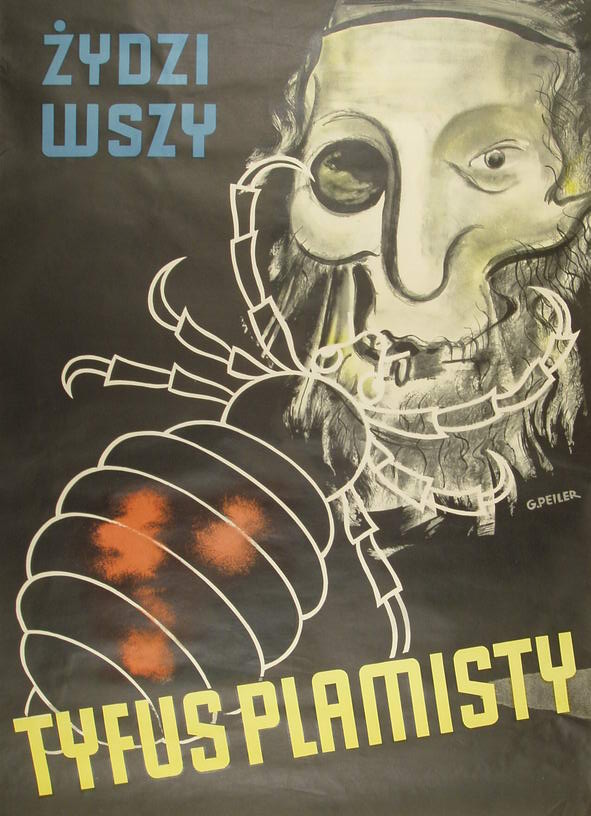
Volkan's discussion focuses on the second (State/mythic animals). We can think here of animals such as the Afghan snow leopard or the Indian Elephant, tiger or cobra, but also how these animals are used also by opposing groups (to attack, denigrate or demonise the animal-other, representing the alien group-other). Of course, many of these group animals are not 'chosen' by the group, but attributed by their enemies (eg. the attribution of jews as rats, or Tutsi's as cockroaches during their respective genocides). This symbolism can also be resisted and reused, such as in Banksy's use of rats in his graffiti, the US Republican Party's use of the elephant, and the various competing national lions and eagles. The various roles of such animals can lead to further understanding about the intersection between mental ecologies, social ecologies, and natural ecologies. 

Of course, there are major problems with this, do animals (or 'nature') have any real status beyond being carriers of human symbolic meaning? Are they just a backdrop for our projections? A tapestry to weave our dreams? What happens when the powerful symbolism of the tiger or the rhino lead them towards extinction as we use their body parts to for ineffective cures for everything from cancer to impotence. This is an issue I explore in more detail in part three of my book, The Ecology of Phantasy, in the context of Deleuze and Guattari's critique of Freud's approach to the Wolfman's dream (see also Freud's Bestiary: How Does Psychoanalysis Treat Animals? Genosko 1993). Nevertheless, whether we like it or not, we do use animals in this way, and they form an important part of the ecological imaginary, and Volkan's article is a good starting point to take this further.


 Vamık D. Volkan

Many national or ethnic groups’ identities are represented by animal symbols. For example, the lion symbolizes British collective identity, while Turks consider the gray wolf their national symbol. This phenomenon goes back to the beginnings of human history-people have always linked their own valued or feared characteristics, and attempted to divide and order experience, through the symbolic and totemic use of animal and plants in their environment.

 
The symbolic significance of animals is sometimes obvious and primal, such as those associated with fertility, warfare, wisdom, or specific behaviors, while in other cases animals are used as symbols for complex and abstract ideas and beliefs. Some primitive people collectively believed, for example, that an omnipotent lion of the heavens swallowed the sun and thereby brought on darkness each day (Biedermann, 1992). In ancient Egypt, Sekhmet, the goddess of war and defender of the sun god Re, was represented by a lion, and in Judeo-Christian tradition, the lion symbolizes both divine and evil power. The wolf has symbolic significance in Old Norse mythology, as well as in the ancient civilizations of Greece, Rome, China, and numerous other cultures, tribes, and ethno national groups. The Turks’ use of the wolf dates back thousands of years to their early history in the steppes of Central Asia. 

In some cases the original significance of an ancient animal symbols within a large group or ethno national collective is difficult to pinpoint. In others, a certain animal was adopted by a leader and thereby elevated or resurrected as a unifying symbol. “Genghis Khan … claimed to be descended from a blue-gray ”chosen wolf” which itself was sired by the sky (Tenggri)” (Biedermann, 1992, p.387).  Adolf Hitler’s fascination and identification with a wolf also has been documented: “As a boy, he had been pleased to find that his given name was derived from the Old German ”Athalwolf” meaning noble “wolf” (Ehrenreich, 1997, p.212). Hitler named his favorite dog “wolf” and generalized his identification with this predator by calling the SS his “pack of wolves.” At times, he also believed that the German people followed him because they realized that “now a wolf has been born” (Waite, 1993, p.26).
 

Animals and other symbols in modern times also have come to represent large-groups through conventional agreement. A country’s animal and the symbols displayed on its flag are often chosen through a vote or general consensus, as are the birds and flowers of each state in the US. Sometimes such choices are the subject of intense debate, competition, and rivalry. But even when the process of such selections assumes seemly irrational proportions—indicating that large-group symbols are psychologically powerful things—in the end, like a red octagon that symbolizes “stop” the relation between signifier and signified is clear.  

In psychoanalysis, however, the concept of a symbol has a narrower meaning and focuses on how it originates in the unconscious. In The Interpretation of Dreams (Freud, 1900), and in his many other writings that followed, Freud understood symbols as a means of reducing anxiety by repressing unacceptable wishes or other derivatives of instinctual drives.  An individual is aware of the symbol itself, but unaware of what is symbolized. If someone dreams of a snake, for example, he sees an actual image of a snake, but the penis that the snake may represent is not consciously perceived. Initially, Freud believed that symbols representing body parts, body functions, birth, death, sexuality, and childhood intimate objects and relationships with parents and siblings are universal and are included in a kind of system of phylogenetic meaning.  Such a belief  “has now been largely replaced by the assumption that the recurrence of such symbols across cultures has to do with the similarity of human beings’ experiences and interests from infancy onward and of the cognitive processes involved in symbol formation” (Moore and Fine, 1990, p.192).

 
Humans therefore share the need to use animal and other symbols and many are cross-cultural. Yet this generality is concurrent with specificity in regard to the symbols used by large groups. Neighboring groups typically do not have the same animal symbol, even if they share many other historical, religious and linguistic characteristics. When large groups do share a symbol such as the lion, one ethno national group’s lion has minor or major differences from another large group’s lion, and members may adamantly defend and justify the use of a lion to specifically symbolize their exclusive group identity. 

Many perspectives, including those of anthropologists, archaeologists, historians, sociologists, political scientists and others, are consequently needed to understand the origins, evolution, and perpetuation of animals’ symbols and their use by groups of people to define collective identity and other beliefs. Psychoanalytic approaches are useful as well in comprehending the complex and intertwined relationship of mankind’s internal and external world that we find expressed in animal symbols.

For example, while psychoanalytic insights alone may not help us understand why a certain large group chose a specific animal symbol thousands of years ago, and what it consciously and unconsciously represented, they can more clearly explain how and why children in a given large group attach themselves to shared symbols and make them an extension of  their internal worlds. Volkan (1988, 1997, and 1999) studied this phenomenon through his concept of suitable reservoirs of externalized self and object images, which is useful in outlining the pre-oedipal beginnings of large-group identity.
 
For practical purposes, during the course of normal development, a child integrates his sense of self around the age of 36 months and develops his core individual identity. This integration, however, is not a total process. Some images of the self as well as internalized objects, both “good” (libidinal determined) and “bad” (aggressively determined), remain unintegrated at this early age.  Because these unintegrated images threaten to destabilize the established core identity, they must be disposed of.

The child utilizes many ways of dealing with unintegrated self and internalized object images and an emotion attached to them (Kernberg, 1976; van der Waals, 1952), and employs many mechanisms ranging from splitting and denial to repression for this purpose. Among the spectrum of mechanisms, those of externalization are critical and ubiquitous. The caretakers in the child’s environment consciously and unconsciously direct the child to externalize his or her unintegrated self and internalized object images onto certain items in their environment. These items already have been accepted by the caretakers as amplifiers of their own cultural, ethnic, or national sentiments, such as a horse and cowboy hat for an American boy. They become suitable reservoirs to absorb children’s externalized and unintegrated “good” images. Unintegrated “bad” images are externalized onto other items, often those that belong to “others” or enemies.  

When one large group’s animal symbol becomes a “good” suitable reservoir for all children belonging to this large group, it creates an invisible network that links the children together. “Good” suitable reservoirs—whether they are animal symbols or other items—become a large group’s marker without children being aware of this process. 
Suitable reservoirs, although they bear some resemblance to transitional objects (Winnicott, 1953), belong to a different phase of life and have different functions. The latter is chosen by the child himself or herself and has a specific meaning only for that child.  Suitable reservoirs are offered to children by adults belonging to a specific large group and become the foundation on which more sophisticated ideations and affects concerning ethno national identity and large-group belonging will be built. It goes without saying that, as children of the same large group grow, they also attribute more sophisticated meanings to their animal symbols and such meanings are condensed into the original function of the suitable reservoir.

Large-group animal symbols which are used as childhood suitable reservoirs have intimate relationships within all children’s, as well as adult’s, internal worlds. Therefore, when a large group regresses (Loewenberg, 1995), individuals may experience large-group animal symbols as “protosymbols” (Werner and Kaplan, 1963)—as if they are one’s large-group identity. Thus, any attack on an ethnic, national, or religious group’s animal symbol (as well as other symbols which originate as suitable reservoirs) is perceived by those belonging to that large group as personal attacks damaging their large-group identity.

During the Cold War period, for example, Americans and the Soviets exhibited exaggerated emotional investment in their respective animal symbols. The enemy’s symbol was either devalued or rendered dangerous while one’s own large-group symbol was invested with idealism. Americans characterized the Russian bear as a vicious, devouring, castrating, or murdering animal, while Soviets portrayed the American eagle as representing a combination of maliciously carnivorous and greedy morality with exhibitionistic phallic activity. Such depictions invoked anger and were considered deeply offensive by the respective sides. 
 
Animal symbols are also used in a pathological way to dehumanization an enemy (Bernard, Ottenberg, and Redl, 1973) during war or war like situations. In such cases, one large group regresses and begins to utilize protosymbols of the enemy as their shared “bad” suitable reservoir (Volkan, 1997, 1999). First, the enemy is demonized but still is perceived as retaining human qualities, although they are predominantly negative human qualities.  Later, those of an enemy group may be rendered as vermin or a loathsome animal that must be exterminated, or a cancer that must be excised “for the sake of humanity.” In Rwanda, Hutu first referred to Tutsi as evil people and later began calling them "cafards," meaning cockroaches (de Swaan, 1996).

Many readers also may recall reports of symbolic dehumanization associated with the Iraqi invasion of Kuwait, and the behavior of Iraqi troops in Kuwaiti City’s zoo. With no one to feed or care for the animals displayed there, many suffered terrible deaths, or were believed to have been eaten by Iraqi soldiers. These stories were prevalent among Kuwaitis after the war, and reflected their belief that the Iraqi soldiers were less like humans and more like savage and predatory animals. Conversely, other stories involved reports that Iraqi soldiers locked some Kuwaiti women, whom they had raped, in empty zoo cages and exhibited them naked as if they were animals.

On the other hand, a regressed large group may utilize animal symbols in a reparative or adaptive rather than destructive way. For example, Cypriot Turks chose parakeets as a “good” suitable reservoir (Volkan, 1976, 1988), during the tumultuous period following Britain’s withdrawal from the island in 1960.  Although independence brought hopes for a new future, Cypriots continued to consider themselves either Greek or Turkish, and within three years a bloody conflict broke out between the two groups. Between 1963 and 1968, Cypriot Turks were forced to live in increasingly small enclaves that became more like prisons or ghettos. During this traumatic period of their history, they raised hundreds and hundreds of parakeets, whose cages hung everywhere—at homes, at grocery stores, at coffee shops. The Cypriot Turks were preoccupied with the birds and obsessively kept track of which ones were fertile, which was the mother of other birds, which one was crippled, and so on. 

Originally the birds symbolized the victimized, imprisoned Turks—by externalizing their “bad” aspects, the people could tolerate living in subhuman conditions. But Cypriot Turks went one step further, and by giving the parakeets positive attributes they turned these symbols into “good” suitable reservoirs. The parakeets came to represent their hopeful, good parts—as long as the birds were fertile and sang happily, Cypriot Turks unconsciously felt assured that they themselves could survive imprisonment. 

In 1968, the political situation on the island changed with the intervention of Turkish troops, and Cypriot Turks could leave their enclaves.  The utilization of birds as suitable reservoirs ended and parakeets, which are not native to the island, also disappeared, although some continued to be kept as ordinary pets. This brief example and the others mentioned here indicate that animals figure prominently in the relationship between human’s inner and outer worlds, and such themes will be further explored in this volume. 

REFERENCES:
1- Bernard, W.W.; Ottenberg, P., and Redl, F. (1973.) Dehumanization: A Composite Psychological Defense In Relation To Modern War. In Sanctions of Evil: Sources of Social Destructiveness, (Eds.), N. Sanford, and C. Constock, pp.102-124. San Francisco: Jossey-Bass.
2- Biedermann, H. (1992.) Dictionary of Symbolism: Cultural Icons and the Meaning Behind Them, tr. J. Hulbert, New York: Facts on File.
3- de Swaan, A. (1996.) Widening Evils of Disidentification: On the Psycho-and Socio-genesis of the Hatred of Distant Strangers: Reflections on Rwanda. Paper presented at Civilization and Its Enduring Discontents:Violence and Aggression in Psychoanalytic and Anthropological Perspective meeting. Bellagio, Italy, September 4.
4- Ehrenreich, B. (1997.) Blood Rites: Origins and History of the Passions of War. New York: Metropolitan Books.
5- Erikson, E.H. (1956.) The Problem of Ego Identification. Journal of the American Psychoanalytic Association, 4:56-121.
6- Freud, S. (1900.) The interpretation of dreams. Standard Edition, 4 and 5. London: Hogarth Press,1961.
7- Howell, W.N. (1995.) “The Evil That Men Do…” Societal Effects of the Iraqi Occupation of Kuwait. Mind and Human Interaction, Vol.6:150-169.
8- Kernberg, O.F. (1976.) Borderline Conditions and Pathological Narcissism. New York: Jason Aronson.
9- Loewenberg, P. (1995.) Fantasy and Reality in History. New York: Oxford University Press.
10- Moore, B.E., and Fine, B.D. (1990.) Psychoanalytic Terms and Concepts. New Haven: American Psychoanalytic Association and Yale University Press.
11- Saathoff, G.B. (1995.) In the Halls of Mirrors: One Kuwaiti’s Captive Memories. Mind and Human Interaction, Vol.6:170-178.
12- Saathoff, G.B. (1996.) Kuwait’s Children: Identity In the Shadows of the Storm. Mind and Human Interaction, Vol.7:181-191.
13- van der Waals, H.G. (1952.) Discussion Of the Mutual Influences In the Development of Ego and Id. In Psychoanalytic Study of the Child, 7:18-19.
14- Volkan, V.D. (1976.) CyprusWar and Adaptation. Charlottesville, VA: The University Press of Virginia.
For more of Volkan's writings, see: http://www.vamikvolkan.com